Maintaining dedicated sanitation infrastructure directly protects project timelines from regulatory stop-work orders. Under federal OSHA standard 29 CFR 1926.51, active construction operations must maintain an exact…
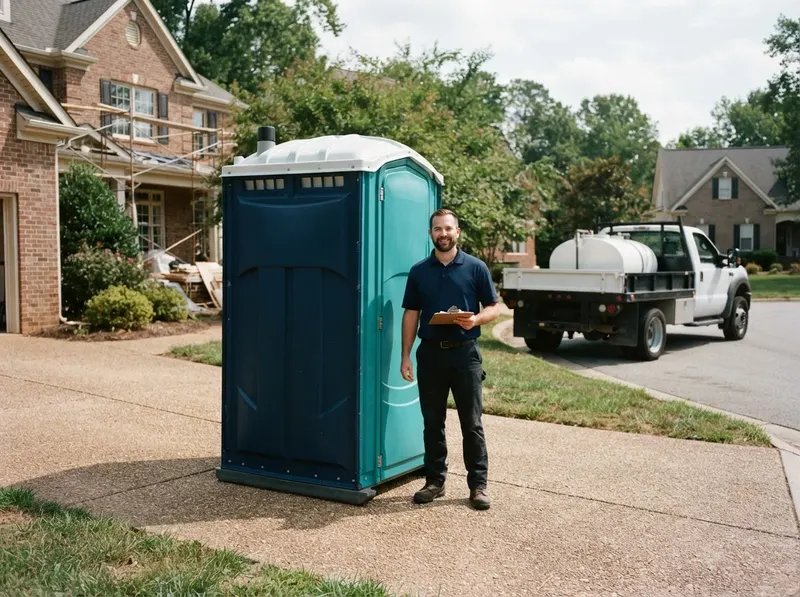
Maintaining dedicated sanitation infrastructure directly protects project timelines from regulatory stop-work orders. Under federal OSHA standard 29 CFR 1926.51, active construction operations must maintain an exact ratio of one operational toilet for every 20 workers on a single shift. In dense Charlotte urban developments along South End and Dilworth, where street parking is restricted and parcel setbacks are tight, standard static units fulfill municipal code without consuming valuable framing footprints or staging zones. The trade-off between standard static cabins and towable or flushable trailers centers on site access: a standard static unit occupies a compact 44-inch by 48-inch base and sits securely on unimproved turf, clay, or gravel, whereas larger water-dependent units require continuous municipal water hookups and wide turning radiuses that tight infill lots in NoDa or Plaza Midwood cannot support.
Placement logistics require firm ground accessible by a 26-foot vacuum pump service vehicle. A standard 60-gallon static holding tank weighs roughly 160 pounds empty, but exceeds 600 pounds when full, making relocation by hand impossible once operational. Site supervisors along the Highway 29 corridor in University City and commercial developments down in Ballantyne must preserve an unobstructed 25-foot corridor between the access road and the restroom door so vacuum intake hoses can clear the tank every seven days without dragging across fresh rebar or finished concrete. When clay soils become saturated during regional winter rains, placement should remain within 10 feet of paved curbs or compacted gravel staging paths to prevent pump trucks from rutting project access points.
Servicing reliability defines site health. Every scheduled weekly service stop follows a consistent procedure: the vacuum hose extracts wastewater down to the tank floor, interior touchpoints undergo hospital-grade chemical washdowns, the reservoir is recharged with five gallons of water mixed with blue quaternary ammonium neutralizer, and paper stocks are replenished. A standard construction portable restroom rental is a managed sanitary utility rather than a temporary dumpster; holding tanks cannot function as general trash receptacles for masonry cut-offs, concrete slurry, or lunch debris, as physical debris clogs 3-inch commercial vacuum lines and triggers non-compliance fees.
Every job gets a firm, written price after a free on-site visit.
Tell us about your standard construction portable restrooms job in Charlotte and we'll send a clear, written quote, usually the same day.
 Grand Canyon Portable Toilets